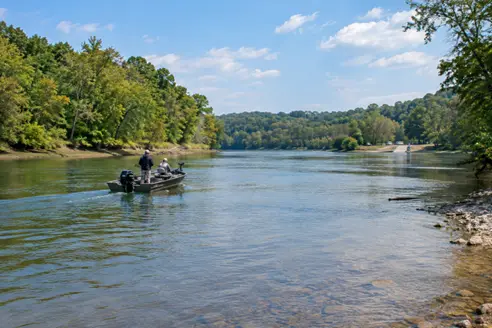
Central Kentucky anglers have a wide range of water close to home, from sheltered farm ponds and winding river sections to broad reservoirs where afternoon wind can quickly change the ride. Before comparing features, start by identifying where you will fish most often. Reviewing tracker boats for sale can be a useful next step once you know whether your usual trips call for shallow-water access, a broad casting deck, family seating, or stronger rough-water capability.
The best fishing boat is rarely the one with the longest equipment list. It is the one that fits the water, the people aboard, the way you fish, and the practical limits of your towing, storage, and launching setup. A boat that feels easy to use is more likely to get you out on Kentucky water consistently.
Table of Contents
- Why Water Type Matters
- Match the Boat to Your Fishing Style
- Choosing a Boat for Lakes
- Choosing a Boat for Rivers
- Planning for Coastal Fishing Trips
- How Hull Design Changes the Ride
- Size, Capacity, and Storage
- Engine, Trailer, and Storage Checks
- Safety Equipment to Plan For
- A Simple Buying Checklist
Why Water Type Matters
A calm pond, a large lake, and a moving river place very different demands on a boat. Wind, current, water depth, boat wakes, submerged debris, and changing weather all affect comfort and control. A shallow, light boat may be excellent for quiet coves and narrow creek mouths, while a deeper hull can provide a more confident ride when reservoir chop builds. Ask “Where will I use it most?” before asking which boat looks best.
Match the Boat to Your Fishing Style
Your usual crew and fishing habits should shape the layout. A solo angler may prioritize a compact package that launches quickly and is simple to store. Families often benefit from secure seating, handholds, shade options, and room for coolers. Bass anglers may want open casting areas, organized tackle storage, and a trolling-motor-ready bow. Crappie and panfish trips can favor stable platforms and space for multiple rods. For buyers comparing layouts and local service options, searching for boat dealers near me can help turn a general idea into an in-person fit check. Consider how often you fish, where you plan to go, and which features will make each trip more comfortable. Choosing a boat that fits your needs can help you enjoy more time on the water without paying for features you rarely use.
Choosing a Boat for Lakes
Small, protected lakes often reward a modest draft, easy launching, and a stable platform for casting. On larger Central Kentucky reservoirs, conditions can change across open water, especially when wind and wakes create chop. Consider freeboard, which is the height of the boat’s sides above the waterline, along with seating security, fuel capacity, storage, livewell needs, and electronics for depth and fish location. A water test in varied conditions can reveal much more than a showroom walk-through.
Choosing a Boat for Rivers
Rivers introduce current, floating debris, changing water levels, rocks, stumps, and narrow launch areas. A compact boat can be easier to turn, trailer, and position in tight channels. A shallow draft can be valuable in backwaters and creeks, but it does not eliminate the need to travel carefully and watch for hazards. Choose a motor and propeller setup suited to the water you actually run, and check local access rules before entering restricted or seasonal areas.
Planning for Coastal Fishing Trips
Even if your home water is inland, a fishing vacation to coastal bays requires a different level of preparation. Tides, salt exposure, stronger winds, and fast-changing conditions matter. Protected bays are not the same as open coastal water, and a boat suited to a calm Kentucky lake may not be appropriate for offshore travel. Plan for corrosion prevention, drainage, navigation equipment, and a hull that matches the intended conditions.
How Hull Design Changes the Ride
Hull shape affects shallow-water access, stability, and how a boat handles chop. This comparison makes the main trade-offs easier to see.
| Hull Type | Best Fit | Main Advantage | Key Tradeoff |
| Flat-bottom | Shallow, calm water | Stable at rest | Rougher ride in chop |
| Modified-V | Lakes and mixed conditions | Balanced versatility | Less shallow-water focus |
| Deep-V | Large, choppy water | Smoother rough-water ride | Deeper draft |
In general, flat hulls favor calm, shallow water, while V-shaped hulls are intended to manage chop more comfortably. The practical differences between flat-bottom and bay boat designs are especially important for anglers deciding whether shallow-water stability or more capable handling in variable conditions matters most. Higher freeboard can provide a greater sense of security, although it also gives the wind more surface to push against.
Size, Capacity, and Storage
Bigger is not automatically better. A larger boat can bring more room and comfort, but it may also require a stronger tow vehicle, more storage clearance, and a better ramp. Think about the normal number of passengers, tackle, food, fuel, batteries, and safety gear you will carry. Measure the garage door, gate, parking space, and trailer path before making a final decision.
Engine, Trailer, and Storage Checks
The boat is only part of the ownership package. Confirm the manufacturer’s maximum horsepower rating, then compare the fully loaded trailer weight with your tow vehicle’s rating. Inspect trailer tires, bearings, lights, brakes when equipped, tie-downs, and the winch strap. Budget for fuel, maintenance, batteries, registration, insurance, electronics, and storage. If the boat will be exposed to saltwater, rinse it thoroughly with fresh water after each trip.
Safety Equipment to Plan For
Safety gear should influence the layout and capacity decision from the beginning. Keep room for properly fitting wearable life jackets, a throwable device when required, a fire extinguisher when required, a sound-producing device, navigation lights, an anchor with suitable rode, first-aid supplies, and dependable communication tools. The right life jacket fit and accessibility matter because a flotation device should be in good condition, sized for its user, and easy to reach rather than buried beneath gear.
A Simple Buying Checklist
- List the lakes, rivers, and other water you expect to use most.
- Choose the primary purpose: fishing, family cruising, or mixed use.
- Set a full budget that includes the trailer, motor, gear, storage, and upkeep.
- Confirm your tow vehicle and storage space can handle the complete package.
- Test seating, walking room, casting space, storage lids, and helm visibility.
- Make sure required safety gear fits aboard without crowding the crew.
- Take a water test before buying whenever possible.
Final Thoughts
Choosing a fishing boat for Central Kentucky starts with honest priorities. A compact, shallow-running setup may suit quiet rivers and protected coves, while a deeper, more substantial hull may be a better match for large lakes and changing wind conditions. Focus on real use, not just flashy features, and you can select a boat that feels safer, easier to manage, and more rewarding to use.
Also Read
- Dark Female Names: 549+ Mysterious, Spy & Gothic Names 2026
- How to Make an Explainer Video a Gaming Audience Will Actually Watch
- Group Chat Names for 4 People: 500+ Funny, Cool & Unique Ideas for 2026