
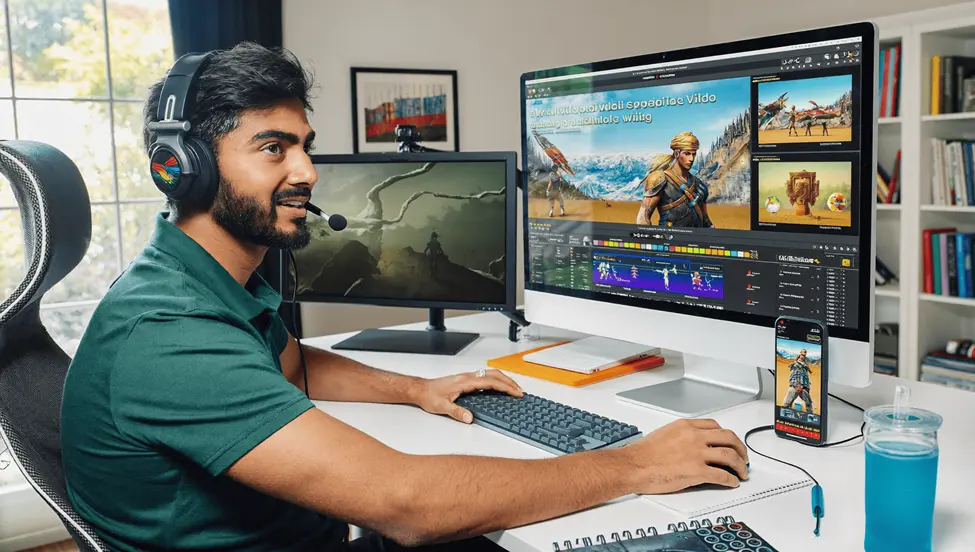
Gaming audiences are the hardest viewers to make anything for, because they already watch more video than almost any other group.
They know what a padded introduction looks like. They know when somebody explaining a mechanic has not played past the tutorial. They know when footage has been selected to prove a point the full clip would contradict. And they will say all of it in the comments, accurately, within an hour.
That sounds discouraging and is actually useful. An audience this literate rewards precision in a way general audiences never do, and a creator who gets the detail right builds something durable very quickly.
An Explainer Video with AI-powered video creation features from Higgsfield works well here because the subject is almost always a system rather than a story, and systems are what this format is for. You generate the framing and the overlays, and the footage carries the evidence.
What Will This Audience Actually Watch?
Things the game does not explain and the wiki explains badly.
- Mechanics with hidden numbers, which most games conceal
- Timing and frame behaviour, where a fraction decides outcomes
- Settings and performance, which affect every session
- Why a build works, rather than what the build is
- An Explainer Video you make about something you actually tested
The hidden numbers point is where the demand sits. Games rarely tell players how damage is calculated, how a cooldown interacts with a stat, or what a description actually means in practice, and the people who find out become the sources everybody else cites.
Build lists age badly and mechanic explanations do not. A list of optimal loadouts is obsolete in a month; an explanation of why a stat behaves the way it does survives several patches.
Make the explanation rather than the list. It is more work and it keeps earning.
What Will They Not Watch?
Anything that opens slowly or sounds unfamiliar with the game.
- Introductions, including anything before the subject
- Obvious information presented as insight
- Vague claims without numbers behind them
- Footage that does not match the explanation
- An Explainer Video created by somebody who has clearly not played
The footage mismatch is the one that destroys credibility fastest. Explaining a mechanic over gameplay that does not demonstrate it tells a knowledgeable viewer that you have not tested what you are describing.
Use footage that shows the thing itself. If you cannot capture it cleanly, say so on screen and show the next best evidence rather than filling the frame with unrelated play.
Start on the subject. The second sentence should already contain information.
How Should Mechanics Be Shown on Screen?
With the numbers overlaid and the footage slowed where frames matter.
- Overlay the Explainer Video values being discussed, as they change
- Slow down for timing, since games run on discrete frames
- Show real speed afterwards, so the feel is clear
- Mark the exact frame where something happens
- Generate the overlay treatment once and reuse it everywhere
This is one of the few contexts where slowing footage is the correct choice rather than a distortion. A game executes in frames, a window of a few frames decides an interaction, and frame-by-frame is how that is examined.
Show real speed as well, immediately after. Slowed footage explains the mechanic and real speed shows what executing it actually demands.
Put a frame counter on screen where the subject is timing. It converts an assertion into something the viewer can verify.
What Must Never Be Claimed?
A mechanic you have not tested, and a number you have not measured.
- Never state values you took from another video
- Never present theory as tested behaviour
- Never generate gameplay footage, in any form
- Never claim universality for something you tested on one platform
- Never let an Explainer Video imply testing you did not do
The secondhand numbers problem compounds through this community. One video states a figure, four others repeat it, and within a month it is established fact that nobody measured.
Say where a number came from. Tested across fifty attempts is a different claim from commonly reported, and the audience respects the distinction.
Generated gameplay is a fabrication regardless of intent. The footage is the evidence, and evidence cannot be produced.
Does Patch Versioning Matter?
More than almost anything else, and most creators skip it.
Game systems change with every update. A video explaining a mechanic accurately in one patch becomes misinformation in the next, and it keeps circulating.
- State the version on screen, in the first ten seconds
- Put it in the title where the change is significant
- Pin a comment when something is superseded
- Date the footage, not only the upload
- Make the Explainer Video version visible rather than buried
The pinned comment is the minimum viable correction. It costs nothing and it is the difference between a video that misleads people for two years and one that tells them it is outdated.
Viewers forgive an old video. They do not forgive an old video pretending to be current.
Build versioning into the Higgsfield template so it appears automatically rather than being remembered each time.
What About Footage Rights?
Generally permitted and worth understanding properly.
Most publishers permit gameplay footage in commentary, review and educational contexts, and many publish explicit content policies saying so.
- Check the publisher’s policy before making any Explainer Video, which usually exists
- Commentary and analysis is the permitted category
- In-game music causes more claims than the footage does
- Mute the soundtrack and add your own audio
- Pre-release and beta footage frequently has separate restrictions
The music problem is the one that catches people. Gameplay footage may be entirely permitted while the licensed soundtrack playing over it triggers an automated claim, and the fix is simply turning the music off in the game’s audio settings.
Beta and review-embargo footage has its own rules and those are enforced. Read what you agreed to before capturing anything.
How Long Should These Be?
As long as the explanation needs and not a second more.
- Under three minutes for a single mechanic
- Five to ten for a system with several parts
- Chapters, always, for anything longer
- A short vertical cut for the single most surprising finding
- Make the Explainer Video end when the explanation does
The chapter point matters for this audience specifically. People return to these videos to check one thing, and chapters turn a video into a reference rather than something to rewatch.
Cut the short from the most counterintuitive finding, not the summary. What surprises people is what gets shared.
Padding to hit a runtime is immediately visible to viewers who watch this much video. They skip, and the retention graph shows it.
Does Thumbnail and Title Work Differently Here?
It does, because this audience searches for specifics rather than browsing for topics.
Somebody looking for a mechanic explanation is typing the exact term, frequently with the game name attached, and a clever title loses to a literal one every time.
What works for search-led viewing:
- Name the game and the mechanic explicitly
- Use the community’s term, not the official one, where they differ
- Put the number in the title where you measured one
- Make a thumbnail showing the thing, not your reaction
- Generate the Explainer Video thumbnail template once and reuse it
The community terminology point matters more than it sounds. Players name mechanics themselves, those names stick, and searching the official term returns nothing because nobody uses it.
Putting a measured figure in the title does double work. It signals that you tested something, which is the whole differentiator, and it matches what somebody is searching for.
Reaction thumbnails perform badly with this audience specifically. They want to see the mechanic, the build or the comparison, and a face occupying the frame tells them nothing about whether the video answers their question.
Keep the thumbnail legible at the size it actually appears, which is small and surrounded by competitors doing the same thing.
What Should the Visuals Do?
Support the footage rather than compete with it.
- Keep Explainer Video overlays clean and in one consistent position
- Use the same colour for the same kind of value throughout
- Generate the frame and titles in Higgsfield, not the gameplay
- Keep motion minimal, since the footage already moves
- Store the Higgsfield project so every video matches
The consistent position rule is what makes a series readable. If damage values always appear in the same corner, a returning viewer reads them without looking for them.
Generated material belongs around the footage: openings, chapter cards, diagrams of systems, comparison frames. The gameplay itself stays captured.
A diagram explaining how two systems interact is frequently clearer than any footage, and that is exactly what this format generates well.
How Should the Audio Work?
Clear narration, game audio under it, no music fighting either.
- Record narration separately over the Explainer Video, not while playing
- Duck the game audio beneath the voice
- Keep important game sounds audible, since some are the subject
- Avoid background music entirely for technical content
- Caption everything, since many watch muted
Recording narration while playing produces breathing, controller noise and a distracted delivery. Capturing footage first and narrating afterwards is more work and considerably better.
Where a sound cue is part of the mechanic, let it play clearly and say so. Audio cues are mechanics in many games and deserve the same treatment as visual ones.
Does Naming the Channel Matter Here?
Considerably, because this audience finds things by name and recommends by name.
Gaming communities pass recommendations verbally and in text, which means a channel name has to survive being heard once and typed from memory.
- Make it sayable, and test it aloud before any Explainer Video carries it
- Avoid substitutions and numbers, which never survive repetition
- Check it is not taken across every platform at once
- Avoid locking yourself to one game
- Create a name that works when somebody mentions it in a voice chat
The same thinking applies to in-game identity, and resources like a guide to generating gamertags exist because the problem is genuinely hard: something memorable, available, and not embarrassing in three years.
Tying a channel to one title is the common mistake. Games end, communities move, and a channel named for a specific game cannot follow them.
How Do You Build a Series?
By covering a system properly rather than chasing patches.
- Pick one system and cover it completely across an Explainer Video series
- Make each video standalone, since people arrive mid-series
- Reuse the generated Explainer Video treatment across every episode
- Update rather than replace when patches change things
- Keep the Higgsfield project so updates take an hour
The standalone requirement is practical. Recommendations deliver people to episode six first, and a video assuming five previous ones loses them.
Updating the Higgsfield project beats replacing it. A video edited to add a correction keeps its view history and its comments, and a fresh upload starts from nothing.
What Would One Video Take?
A day, mostly capture and testing.
- Test the mechanic properly, with enough repetitions to be sure
- Record the numbers as you go
- Capture footage that demonstrates it clearly, outside Higgsfield
- Write the script from what you measured
- Generate the overlays and cards in an Explainer Video treatment
- Record narration separately, after the capture
- Caption it and save the Higgsfield project
Then read the comments properly, because corrections arriving there are research.
The testing is the whole value. Everything after it is presentation, and presentation of something nobody measured is what this audience punishes.
FAQ’s
Why do gaming audiences skip so fast?
They watch more video than almost anyone and recognise padding instantly. The second sentence should already contain information.
Is slow motion appropriate here?
Yes, unusually. Games run on discrete frames and timing windows are measured in them, so frame-by-frame is the correct tool.
Can gameplay footage be generated?
Never. The footage is the evidence for the claim, and evidence cannot be produced.
Why does in-game music cause problems?
Licensed soundtracks trigger automated claims even where gameplay footage is permitted. Turn the music off in the game’s audio settings.
Does patch version need stating?
Always, on screen within ten seconds. Mechanics change and old videos keep circulating as though they are current.
Is there a free way to try this?
Higgsfield operates a free tier as part of an AI creative suite, which covers generating overlays and cards for a first video.
Conclusion
Gaming audiences punish imprecision and reward it being got right, which makes them the best possible readership for anybody willing to do the testing.
An Explainer Video built around measured numbers, frame-accurate footage and a visible patch version is the format this subject wants, and Higgsfield generates the framing around it.
Test it yourself, overlay the values, state the version, and mute the game music. The audience checks everything, which is exactly why being right is worth something here.
Also Read
- https://namesvora.com/top-10-roman-shade-companies-in-virginia-and-maryland-5-in-each-state/
https://namesvora.com/indoor-vs-outdoor-projects-when-marine-grade-plywood-is-the-only-material-that-lasts/
https://namesvora.com/250-stylish-gaming-name-design-ideas-cool-fonts-text-effects-creative-gamer-tags/