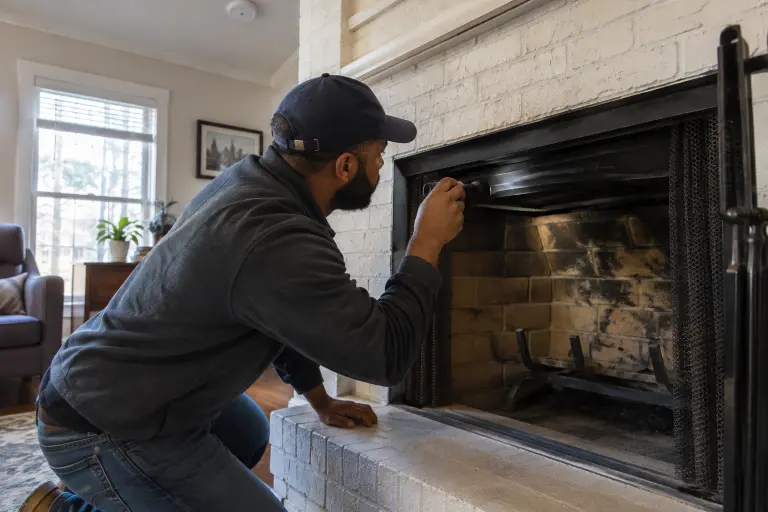
Atlanta homeowners often use fireplaces intermittently, then return to them when cooler weather arrives. That makes a pre-season review especially important, and arranging chimney cleaning Atlanta GA before the first cold spell can help address soot, debris, and other conditions that develop while a system sits unused.
Atlanta’s humid summers, heavy rain, falling leaves, and occasional freezing temperatures can affect both masonry chimneys and their protective components. A simple yearly routine helps homeowners spot changes early and make safer decisions before lighting a fire.
Table of Contents
- Why a Fireplace Check Belongs on the Home Maintenance List
- What to Check Before Lighting the First Fire
- The Difference Between an Inspection and a Cleaning
- Warning Signs That Need Prompt Attention
- How to Review the Chimney Exterior
- Safer Fireplace Habits for Every Season
- Carbon Monoxide and Ventilation Checks
- When to Call a Qualified Professional
- A Simple Yearly Fireplace Checklist
- Common Questions From Homeowners
Why a Fireplace Check Belongs on the Home Maintenance List
Every fire leaves ash and soot behind, and wood-burning systems can also develop creosote deposits in the flue. Even an unused chimney can collect leaves, animal nesting material, or moisture after storms. The requirements for chimneys, fireplaces, vents, and solid-fuel appliances recognized by NFPA 211 reflect the importance of proper construction, inspection, maintenance, and safe removal of combustion gases.
For homes across Atlanta, prevention is usually easier than reacting to smoke problems during the first cold weekend of the year. A check performed before regular use gives homeowners time to correct issues without rushing.
What to Check Before Lighting the First Fire
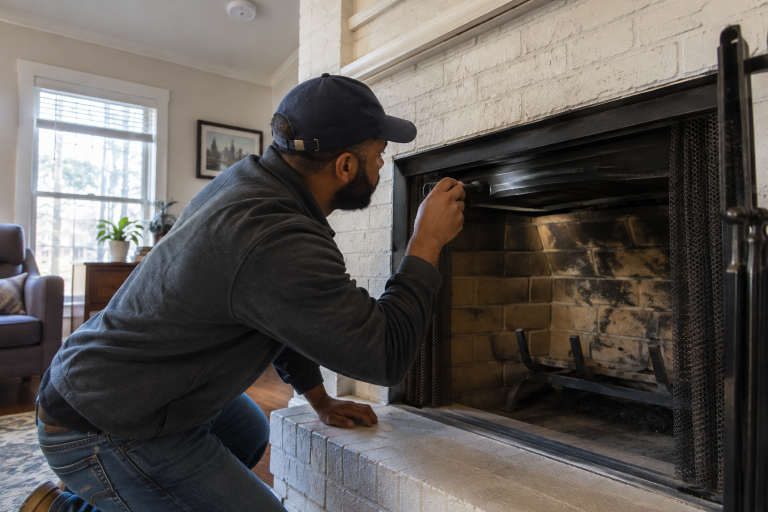
Start inside, where many basic concerns can be identified without tools or roof access. Do not light a fire if something appears damaged, blocked, or unsafe.
- Open and close the damper to confirm that it moves fully and is open before a fire is started.
- Look into the firebox for obvious leaves, nesting material, loose debris, or unusually heavy deposits.
- Check the hearth, firebrick, and fireplace surround for loose material, cracks, or visible deterioration.
- Move rugs, furniture, decorations, and other combustible items well away from the fireplace opening.
- Test smoke alarms and carbon monoxide alarms according to their manufacturer’s instructions.
- Make sure fireplace doors or a protective screen are in usable condition.
The Difference Between an Inspection and a Cleaning
An inspection evaluates accessible parts of the fireplace, chimney, liner, venting route, and related components for conditions that may affect safe operation. A cleaning removes ash, soot, creosote, and debris when deposits or obstructions warrant it. Neither service automatically replaces the other.
A chimney may need cleaning after an inspection reveals buildup, while a recently cleaned chimney can still need inspection for water damage, flue concerns, or a missing cap. Frequency depends on the appliance, fuel, how often it is used, and the condition found in the system.
Warning Signs That Need Prompt Attention
Do not assume that a fireplace is safe simply because it worked normally last season. Stop using it and arrange an evaluation if you notice any of the following:
- Smoke entering the room instead of rising through the flue.
- A strong smoky or musty odor when the fireplace is not operating.
- Thick, shiny, or tar-like deposits in the firebox or visible flue area.
- Cracked masonry, loose mortar, rusted metal, or damaged doors and dampers.
- Scratching sounds, bird activity, or evidence of animals near the chimney.
- Recurring soot around the fireplace opening.
- Headache, dizziness, nausea, weakness, or confusion while the fireplace is running.
How to Review the Chimney Exterior
A ground-level review can reveal visible changes without asking a homeowner to climb onto a roof. Look for a missing or damaged chimney cap, cracked brick, crumbling mortar, white staining on masonry, rust near metal components, or stains around the roofline. Also note branches that could rub against the chimney or fall onto it during a storm.
Water entry can worsen masonry and metal problems over time. After severe weather, inspect the area from the ground and watch for new staining indoors near the chimney chase or ceiling.
Safer Fireplace Habits for Every Season
Fuel choice and everyday habits matter as much as maintenance. The EPA advises homeowners to follow safe wood-burning practices, including using dry, seasoned wood and avoiding materials that can release harmful chemicals or damage an appliance.
- Burn only the fuel recommended for the fireplace or appliance.
- Use dry, properly seasoned firewood in a wood-burning fireplace.
- Never burn household trash, plastics, painted wood, treated lumber, or charcoal in a fireplace.
- Keep a screen or appropriate doors in place to help contain sparks and embers.
- Never leave an active fire unattended.
- Let ashes cool completely before removal.
- Place ashes in a covered metal container outdoors, away from the home and combustible materials.
Carbon Monoxide and Ventilation Checks
Blocked, damaged, or improperly operating venting can allow combustion gases to enter living spaces. Install and maintain carbon monoxide alarms according to manufacturer instructions and applicable local requirements. Alarms should be placed so occupants can hear them, including near sleeping areas.
If a carbon monoxide alarm sounds or anyone develops concerning symptoms while a fireplace is operating, move everyone outside to fresh air, call emergency services from outside, and do not re-enter until authorities say it is safe. Do not try to diagnose a possible combustion-gas problem by lighting another fire.
When to Call a Qualified Professional
Professional evaluation is the safer choice when the chimney has not been inspected in years, the home has changed ownership, remodeling has affected the fireplace area, the appliance or fuel type has changed, or a chimney fire has occurred. Help is also needed for smoke spillage, suspected blockage, damaged flashing or masonry, liner concerns, and unusual gas-fireplace flames or odors.
A Simple Yearly Fireplace Checklist
- Before seasonal use: Test alarms, check the damper, clear the hearth area, and look for visible debris or damage.
- At least once each year: Have the chimney and fireplace system inspected, or more often if usage or conditions call for it.
- After storms: Review the chimney exterior and roof area from the ground for signs of damage or water entry.
- As needed: Clean the system when inspection findings or accumulated deposits indicate cleaning is appropriate.
- After every fire: Keep the fire attended, confirm ashes are fully cool before disposal, and leave the damper open until ashes have cooled.
Common Questions From Homeowners
Can a fireplace look clean and still need an inspection?
Yes. A clean-looking firebox does not reveal every condition inside the flue, liner, venting path, or chimney structure.
Is an inspection needed for a gas fireplace?
Yes, gas fireplaces still rely on proper venting and components that must operate as intended. Follow the appliance manufacturer’s maintenance guidance and seek help for odors, unusual flames, or changes in performance.
What should I do if smoke enters the room?
Stop using the fireplace. If it is safe to do so, ventilate the area, then arrange an evaluation before lighting another fire.
Are chimney-cleaning products a substitute for professional service?
No. A product cannot confirm whether there is a blockage, a damaged liner, a moisture problem, or a structural concern within the system.
Conclusion
A fireplace can be a welcome part of an Atlanta home during cooler months, but safer use starts before the first fire. A yearly review, clean-burning habits, working alarms, and quick action when warning signs appear can help protect the home and everyone in it.
Also Read
- https://namesvora.com/8-things-you-can-do-to-make-your-elderly-loved-one-more-comfortable/
https://namesvora.com/the-fabric-behind-the-fit-how-textile-innovation-is-changing-everyday-apparel/
https://namesvora.com/how-to-choose-the-right-fishing-boat-for-your-water-in-central-kentucky/