Deep excavation work demands more than skilled equipment operation. It requires early planning, engineered support, active observation, and clear decisions when site conditions change. Contractors and owners evaluating approaches to complex earthwork can review the project experience outlined at https://www.sjhauckconstruction.com/ as they build a plan suited to their own site, design, and local requirements.
Whether the work involves a foundation, utility corridor, retaining system, or below-grade structure, the central goal is the same: protect workers while limiting movement that could affect adjacent property, roads, utilities, and public areas.
Why Deep Excavation Safety Needs Early Attention
Excavation risks can develop quickly as material is removed and the forces around an opening change. A wall that appears stable in dry conditions may become unstable after rain, groundwater infiltration, traffic vibration, or the placement of equipment near the edge. Cave-ins, falling material, utility strikes, water accumulation, and moving equipment can all place workers at risk.
Early attention also protects the broader project. Unplanned movement can delay work, damage nearby improvements, and require redesign. Safety planning should therefore begin before mobilization, not after the excavation reaches its final depth.
Start With A Complete Site Review
A useful review brings together available drawings, field observations, surveys, utility records, and access plans. Teams should identify property lines, existing foundations, retaining walls, prior construction, filled areas, roads, sidewalks, rail corridors, drainage routes, and emergency access paths.
Old plans deserve careful review, but they should not be treated as complete proof of existing conditions. Older properties and renovated buildings can contain undocumented foundations, abandoned lines, or changes in grade. The field team needs a process to stop work and reassess conditions when the site does not match the records.
Use Soil Data To Guide The Support Plan
Soil conditions strongly affect excavation stability. Geotechnical reports, borings, groundwater observations, and field classifications help the project team understand whether the site contains cohesive soil, granular material, loose fill, rock, or changing layers. Conditions may vary across a single site, particularly where previous development altered the ground.
Moisture, seepage, vibration, surcharge loads, and construction activity near the edge can reduce stability. When field conditions differ from the assumptions used in the design, affected work should pause until qualified personnel review the support approach. Updating the plan is safer than forcing the work to fit an outdated assumption.
Choose The Right Protective System
Protective measures must match the depth, soil, available space, adjacent loads, and intended work. Qualified design professionals and competent site supervision should determine the final system.
- Sloping cuts excavation sides back at an appropriate angle where space and soil conditions allow.
- Benching creates stepped levels that can reduce the height of unsupported soil faces.
- Shoring uses structural members or hydraulic systems to support excavation walls.
- Shielding uses trench boxes or similar systems to protect workers within an excavation.
- Bracing and tie-backs help manage lateral earth pressure where deeper work or tight property lines restrict open cuts.
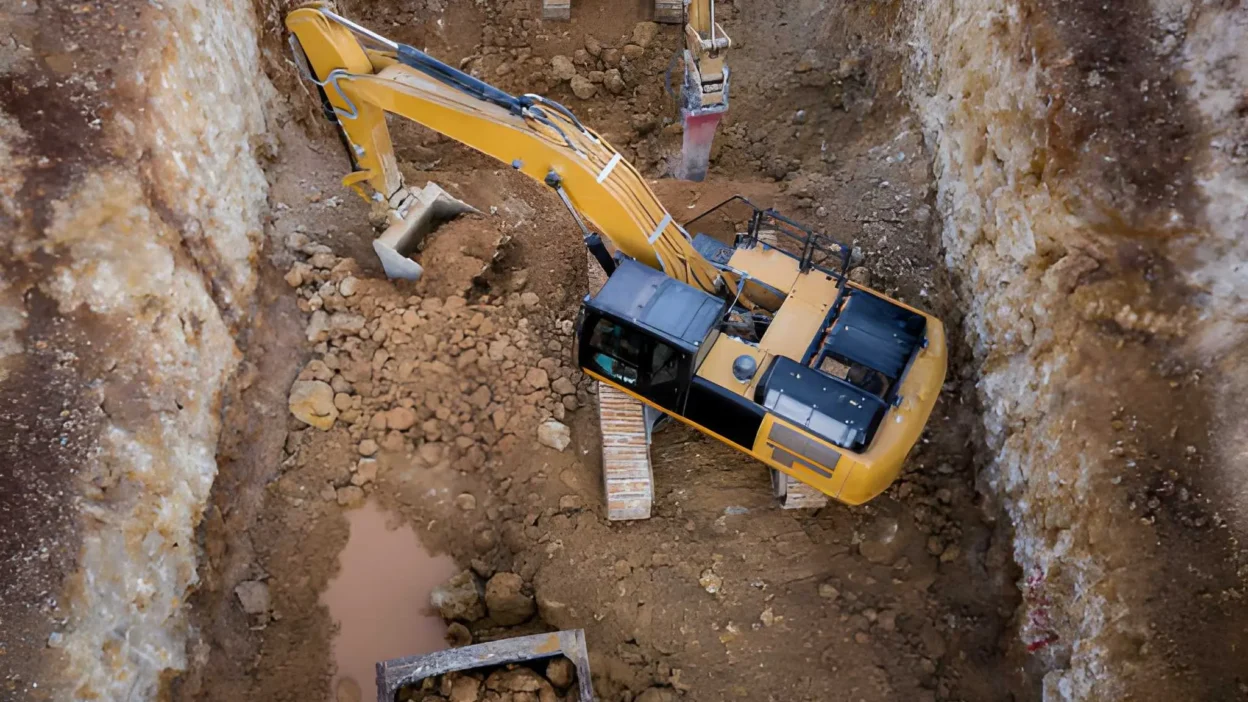
One approach may not suit every portion of a project. A constrained urban excavation, for example, may use shoring along a property line, internal bracing at lower levels, and carefully controlled access routes for crews and equipment.
Protect Nearby Buildings And Infrastructure
Excavation can affect neighboring foundations, masonry walls, pavements, and buried services. Before work starts, document existing conditions with photographs and written observations. Establish monitoring locations where settlement, wall movement, vibration, or deflection could affect safety or property.
Monitoring is most useful when the team establishes action levels in advance. If readings exceed expected ranges, the responsible personnel should know who receives the notice, what work pauses, and what review is required. For a basement excavation beside an older masonry building, that may mean pausing excavation while the engineer evaluates movement and confirms the next support sequence.
Locate Utilities Before Digging
Utility coordination is a core safety task in excavation. Confirm public markings, investigate private lines that may not appear in public records, and keep current utility information available to supervisors and operators. Near a marked facility, use approved exposure methods and stop work if the physical conditions do not match the plan.
Teams can use federal guidance on preventing excavation damage when reviewing ways to reduce the likelihood of damage to buried pipeline facilities and other underground infrastructure.
Manage Water, Weather, And Changing Conditions
Rain, snowmelt, groundwater, freezes, thaws, and flooding can alter excavation conditions. Pumps, sumps, drainage routes, and backup power should be planned before water becomes an emergency. Dewatering also requires careful control to prevent water removal from undermining nearby soil or foundations.
Set clear weather-related stop-work conditions and inspect equipment after storms, impacts from equipment, or other events that could affect stability. Materials and heavy equipment should remain far enough from the edge to avoid adding harmful loads to the excavation wall.
Build Daily Inspections Into The Work Plan
A competent person should inspect the excavation before entry and as conditions change during the shift. The review should include walls, slopes, braces, shields, ladders, ramps, spoil placement, equipment routes, water conditions, cracks, bulges, loose material, and signs of settlement.
Workers need safe entry and exit routes without having to climb unstable surfaces. Current trenching and excavation safety information emphasizes planning, soil evaluation, protective systems, and competent-person oversight to prevent cave-in hazards.
Improve Communication And Emergency Readiness
Daily briefings should connect the owner, design team, general contractor, excavation crew, utility contacts, and safety staff. Discuss changes in soil, groundwater, monitoring results, access routes, nearby work, and the authority to stop unsafe operations.
A written emergency plan should list contacts, the complete site address, responder access routes, worker exits, assembly areas, and procedures for cave-ins, flooding, utility strikes, equipment failure, or structural movement. Larger or unusually deep projects may benefit from drills and coordination with local emergency services before critical work begins.
Questions Project Owners Often Ask
How Deep Is Too Deep For A Basic Plan?
Depth matters, but it is only one factor. Soil, water, adjacent structures, available space, equipment loads, and worker access all affect the level of planning and engineering required.
What Happens If Conditions Change?
Remove workers from the affected area, secure the location, document the change, and have qualified personnel review the support plan before work resumes.
Deep Excavation Safety Checklist
- Complete site, utility, soil, and groundwater reviews.
- Use an appropriate engineered support and protective-system plan.
- Provide safe access, egress, lighting, drainage, and emergency routes.
- Keep spoil piles and equipment away from excavation edges.
- Inspect daily and after significant changes in weather or site conditions.
- Monitor nearby structures and act promptly on unexpected movement.
Conclusion
Deep excavation safety depends on preparation and disciplined response to changing conditions. When soil data, protective systems, utility coordination, monitoring, inspections, and emergency planning work together, teams can manage excavation work with greater control and resilience.
Also Read
- https://namesvora.com/the-fabric-behind-the-fit-how-textile-innovation-is-changing-everyday-apparel/
https://namesvora.com/how-small-businesses-can-build-a-leaner-people-operations-system/
https://namesvora.com/two-little-ducks-and-legs-eleven-where-bingo-nicknames-come-from/