Core Standards for Modern Residential HVAC and Plumbing Solutions
When your hot water supply fails suddenly, it can disrupt your entire household routine. In Pittsburg, CA, we understand that waiting days for a repair is rarely an option when you rely on hot water for showers, laundry, and cleaning. If your system is failing or showing signs of age, you may need a 24-hour tankless water heater replacement in Pittsburg, CA, to restore comfort quickly. Modern systems offer a more reliable way to manage your home’s needs compared to outdated tanks. We are here to help you understand the process, the benefits of switching, and how to keep your home comfortable and efficient year-round.
Upgrade your home’s efficiency with professional support | Contact our team today to schedule your emergency replacement Achieving long-term reliability in home systems requires more than just swapping out a piece of equipment. It demands a commitment to precision. Whether you are addressing an emergency or planning a proactive upgrade, the foundation of a successful project lies in rigorous diagnostic testing. This includes pressure testing both gas and water lines to ensure integrity and safety.
Beyond the initial setup, adherence to local building codes is paramount. In Pittsburg, this means ensuring that every installation meets specific ventilation requirements and load calculations. A system that is not properly sized for the home’s specific demands will struggle to perform, leading to premature wear and inconsistent output. By prioritizing transparent estimates and professional-grade performance testing, homeowners can ensure their investment provides lasting value rather than recurring headaches.
Integrating Energy-Efficient Residential HVAC and Plumbing Solutions
The shift toward tankless technology is driven by the need for smarter energy consumption. Unlike traditional units that keep a large volume of water heated around the clock, tankless systems operate on-demand. This eliminates standby heat loss, the primary source of energy waste in conventional setups. By heating water only when a tap is opened, households can reduce energy consumption by up to 30 percent.
For residents in Contra Costa County, this transition is not just about comfort; it is about long-term savings and environmental responsibility. Many homeowners find that by investing in high-efficiency HVAC and plumbing solutions, they can also take advantage of utility rebates, further offsetting the upgrade’s initial cost.
Sizing and Household Demand Assessment
Before any installation occurs, a professional assessment is vital. A tankless unit is sized based on the household’s required flow rate, measured in gallons per minute, and the temperature rise required to reach your desired output. If your home has multiple bathrooms or high-demand appliances like a dishwasher and washing machine running simultaneously, a technician must calculate the necessary British Thermal Units to ensure the system doesn’t “starve” under pressure. Additionally, upgrading to a high-capacity tankless unit may require an inspection of your existing electrical panel capacity or gas line diameter to ensure the infrastructure can safely support the increased input requirements.
Water Heating Upgrades: Tankless Systems vs. Traditional Storage Tanks
Deciding between a traditional tank and a tankless unit often comes down to long-term goals. While traditional tanks have a lower upfront cost, they typically last only 8 to 12 years. In contrast, a well-maintained tankless unit can provide reliable service for 15 to 20 years.
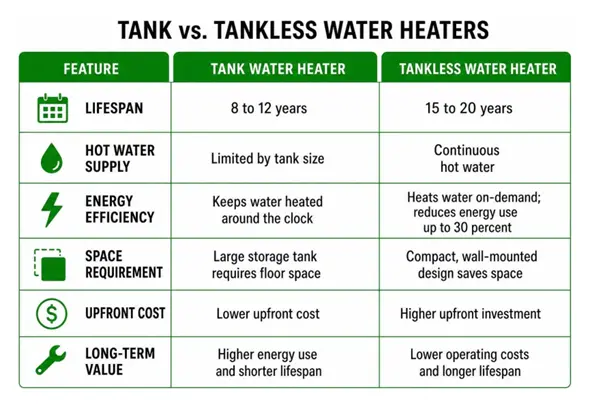
The space-saving nature of wall-mounted tankless units is another major advantage, particularly in smaller homes or utility closets where every square foot counts. While the initial capital outlay for a tankless system is higher, the combination of a longer lifespan, continuous hot water delivery, and reduced operating costs makes it a superior choice for many modern households.
Warning Signs That Warrant Immediate Water Heater Replacement
Recognizing the signs of a failing water heater can save you from a catastrophic leak that could damage your property. Common indicators include:
- Persistent Rust: If you notice discolored or rusty water coming from your hot taps, it often signals internal tank corrosion.
- Inconsistent Temperatures: If your water fluctuates between hot and cold, the heating elements or burner assembly may be failing.
- Recurring Repairs: If you find yourself calling for repairs multiple times in a single year, the cost of maintenance will eventually exceed the cost of a new, efficient unit.
- Age: If your traditional water heater is over 10 years old, it is operating on borrowed time and is likely significantly less efficient than current models.
24-Hour Emergency Replacement Protocols
When a water heater fails completely, you need a solution that works on your schedule. A 24-hour emergency replacement service is designed to mitigate water damage and restore your home’s functionality with minimal delay.
The standard installation window for a professional technician is typically 3 to 5 hours. During this time, the team will manage the safe removal of the old unit, perform necessary gas or electrical adjustments, commission the new system, and provide a thorough walkthrough to ensure you understand how to operate your new, efficient water heater.
Permitting, Code Compliance, and Professional Execution
In Pittsburg, CA, plumbing and HVAC work is governed by strict municipal and county standards. Proper installation is not just about functionality; it is about safety. This includes verifying direct-vent exhaust lines to prevent carbon monoxide buildup and ensuring the unit is secured with seismic strapping to meet California building codes.
Professional execution also involves checking for proper backflow prevention and ensuring that the combustion air ventilation is sufficient for the unit’s output. Attempting to bypass these requirements can lead to failed inspections or, more dangerously, unsafe operating conditions. Always rely on licensed professionals who are familiar with local requirements in Pittsburg and Contra Costa County.
Selecting Certified Contractors for Residential HVAC and Plumbing Solutions
When hiring for a 24-hour tankless water heater replacement, verify that the contractor holds valid state trade licensing. Beyond the basics, look for manufacturer-specific certifications, which indicate the technician has undergone specialized training for that brand’s equipment. A reputable contractor will provide clear warranty coverage on both parts and labor and will always conduct a final walkthrough to verify the system is operating at peak efficiency before leaving your property.
Preventive Maintenance Protocols to Maximize System Lifespan
Even the most advanced tankless water heater requires routine care to maintain its efficiency. By following a consistent maintenance schedule, you ensure the system continues to deliver on its promise of longevity.
- Annual Descaling: In areas with hard water, mineral buildup inside the heat exchanger is inevitable. An annual flush with a descaling solution prevents efficiency loss.
- Sediment Filtration: Regularly checking and cleaning the inlet water filter prevents debris from entering the system.
- Pressure Relief Valve Inspection: Ensure the valve functions properly to prevent over-pressurization.
- Air Filter/Intake Check: Keep the intake vents clear of dust and debris to ensure the burner receives sufficient oxygen.
- HVAC Integration: If your tankless system is part of a larger home efficiency plan, ensure your HVAC air filters are changed quarterly to maintain overall system health.
Frequently Asked Questions About Residential Systems
How long does a standard tankless water heater replacement take?
A professional replacement typically takes between 3 and 5 hours. This timeframe accounts for the removal of the old unit, the alignment of venting, gas line verification, and the necessary testing to ensure the system is operating correctly.
What permits and safety inspections are required in Pittsburg, CA?
Any replacement of a water heating system in Pittsburg requires a municipal plumbing permit. Installations must comply with California Title 24 energy standards. Once the work is complete, a final city inspection is required to verify that the installation meets all safety and seismic restraint requirements.
How do tankless water heaters contribute to lower utility bills?
By eliminating standby heat loss, these units break the cycle of constantly heating a large water tank. Because they only activate when you turn on a hot water tap, they use energy only when needed. Coupled with high-efficiency burners, this can lead to significant reductions in your monthly gas or electric bills.
Conclusion
Upgrading your water heating system is one of the most effective ways to enhance your home’s comfort and efficiency. By choosing a 24-hour tankless water heater replacement in Pittsburg, CA, you are not just fixing a broken appliance—you are investing in a long-term solution that provides endless hot water, saves space, and reduces your environmental footprint. Whether you are facing an emergency or planning for the future, prioritize professional installation standards to ensure your home remains a safe, comfortable, and efficient space for years to come.
Also Read
- https://namesvora.com/how-to-choose-a-unique-name-for-your-gaming-or-sports-group/
https://namesvora.com/how-to-prioritize-environmental-risks-across-multiple-departments/
https://namesvora.com/how-hvac-contractors-detect-hidden-duct-damage/