The Hidden Influence of Spaces on Human Experience
The spaces we enter can shape how comfortable, welcome, or at ease we feel. Architecture, lighting, temperature, sound, air quality, and scent all contribute to the overall environment. Their effects are not identical for everyone: personal preferences, cultural associations, sensitivities, and the purpose of a space can influence how people respond. As a result, designers and businesses are increasingly considering sensory experience alongside appearance and function.
Interior Design Beyond Visual Appeal
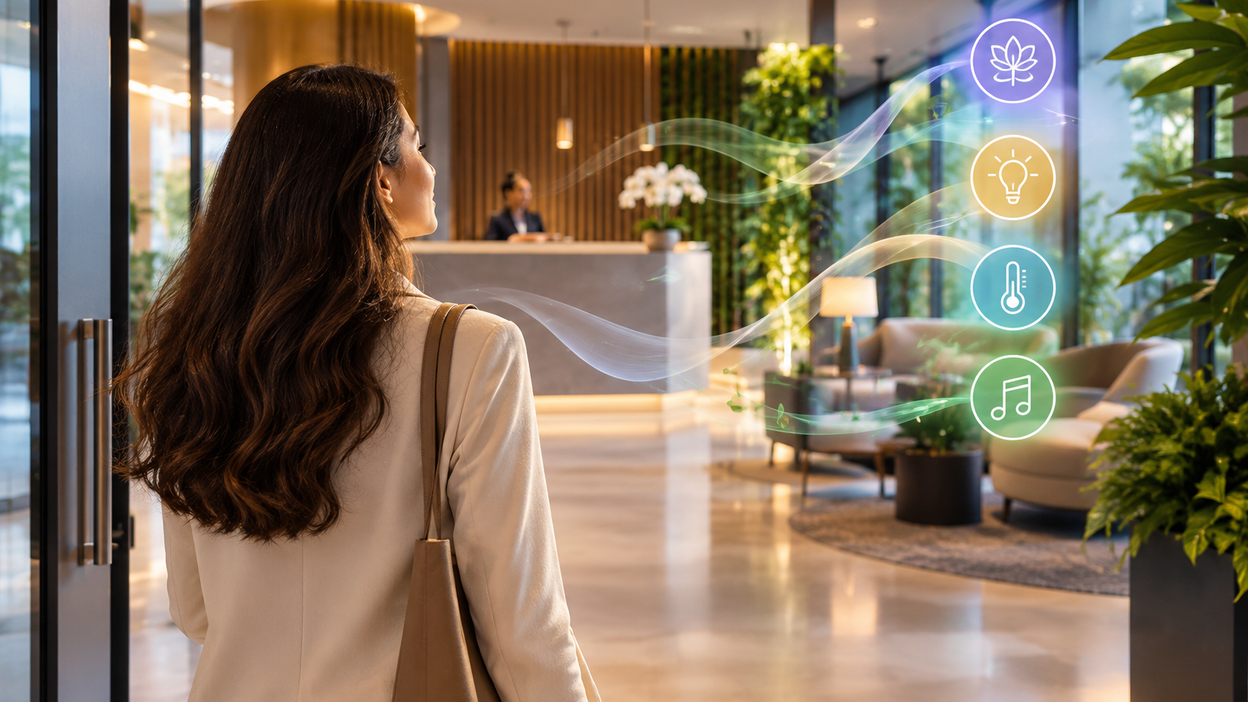
Sensory design considers how several environmental cues work together rather than treating a room as a purely visual setting. In a hotel lobby, for example, clear wayfinding, comfortable seating, suitable lighting, manageable noise, and good ventilation may do more to support a positive arrival than any single decorative feature. A subtle fragrance may be considered as one additional element, provided it suits the setting and does not interfere with visitors’ comfort.
How Scent Technology Works in Modern Environments
Scent systems vary in how they disperse fragrance. Some use heat, while others use airflow or atomization. A Cold Air Diffuser uses cold-air diffusion to disperse fragrance oil without heating it. By dispersing fragrance oil without heating it, cold-air diffusion systems offer an alternative to traditional heat-based fragrance methods. Their performance depends on factors such as equipment settings, fragrance formulation, room size, placement, and airflow. The result should therefore be assessed in the space where the device will be used rather than assumed to be uniform in every environment.
The Psychology Behind Memorable Spaces
Research suggests that ambient scents can influence how people evaluate and experience certain environments, although responses vary with personal preferences, scent intensity, familiarity, and context. For example, a study of hotel guest rooms examined whether introducing a pleasant ambient scent affected participants’ emotional responses. Other research has investigated how odors can affect social perception, including evaluations of human faces; this work is relevant to the broader study of smell and perception, but it should not be treated as direct evidence about smart-building technology. The Frontiers in Human Neuroscience study explores this narrower relationship between odor and perception. These findings support a measured conclusion: scent can be one influence on experience, not a guaranteed way to create a particular emotion or memory.
Scent in Hospitality and Customer Environments
Hotels and other hospitality businesses often pay close attention to the atmosphere guests encounter in shared spaces. Research on ambient conditions in hotels has examined links between the environment, guest satisfaction, and loyalty intentions. A peer-reviewed study on ambient scent in hotel guest rooms used a controlled comparison of scented and unscented rooms to explore guests’ emotional responses. This is useful evidence for understanding a specific setting, but it does not mean that every fragrance or diffusion system will produce the same result. In practice, a hotel might test a low-intensity scent in a lobby, gather guest feedback, and adjust or discontinue it if it causes discomfort.
Workplaces: Comfort Before Productivity Claims
Some workplaces consider subtle ambient fragrance as part of broader environmental design. However, the evidence presented here does not establish that scent consistently improves employee productivity. Ventilation, indoor air quality, employee preferences, and fragrance sensitivities should remain priorities. In shared offices, fragrance-free areas or a no-scent policy may be more appropriate than adding fragrance, particularly where occupants report irritation or discomfort.
Personalized Home Experiences
At home, people may choose fragrance to suit a room or occasion, such as a light scent in an entryway or a relaxing fragrance in a living area. Preferences differ, so starting at a low intensity and allowing household members to share feedback is sensible. Diffusion should not replace fresh-air ventilation or the identification and removal of unwanted odors. People who are sensitive to fragrances may prefer unscented spaces.
Smarter and More Responsible Indoor Environments
Connected devices can make it easier to schedule or adjust environmental systems, but automation does not remove the need for judgment. Room size, air movement, occupancy, and the needs of the people using a space should guide decisions about scent. Any fragrance system should be used according to its manufacturer’s instructions and in a way that avoids excessive intensity. Good indoor environments depend on a combination of comfort, accessibility, ventilation, and individual choice.
Why Small Environmental Choices Matter
The experience of a space is shaped by many visible and invisible details. Scent may contribute to that experience in some settings, but it works alongside practical factors such as cleanliness, temperature, acoustics, lighting, and air quality. Thoughtful design means testing choices in context, listening to users, and being willing to change an approach when it does not meet their needs.
Conclusion
Innovation is expanding how people design and manage indoor environments, including the use of technologies that disperse fragrance. Cold-air diffusion offers one method of distributing fragrance without heating the oil, but performance depends on the system and the setting. Research on ambient scent suggests that it can influence some evaluations and emotional responses, while also showing why context matters. The most effective spaces are not created by fragrance alone; they balance sensory choices with ventilation, comfort, and respect for individual preferences.
Read more: https://namesvora.com/top-10-roman-shade-companies-in-virginia-and-maryland-5-in-each-state/